


The Enterprise Breeding System (EBS), through its Global User Support (GUS) initiative, successfully conducted a two-week Train-the-Trainer (TtT) program for the International Institute of Tropical Agriculture (IITA)-Yam team from May 11 to May 22, 2026. The online training aimed to strengthen local capacity and support the broader adoption of EBS tools and workflows within the institute.
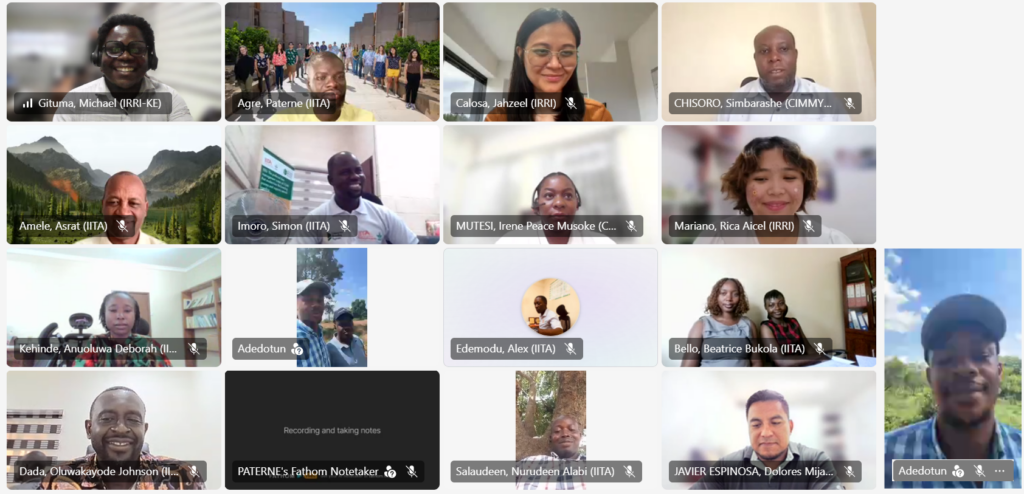
The activity forms part of the new EBS Global User Support working model, which focuses on enabling adopting institutes to independently implement and sustain EBS operations through trained local support teams and data managers. The training covered the basic use of tools across the four EBS domains and introduced participants to end-to-end breeding workflows, user roles, system navigation, and available support resources.
The training sessions were facilitated by EBS trainers Mijail Javier, Michael Gituma, Simbarashe, and Rica Aicel Mariano, with additional support from Jahzeel Ramos Calosa and Irene Mutesi Musoke during selected sessions and activities.
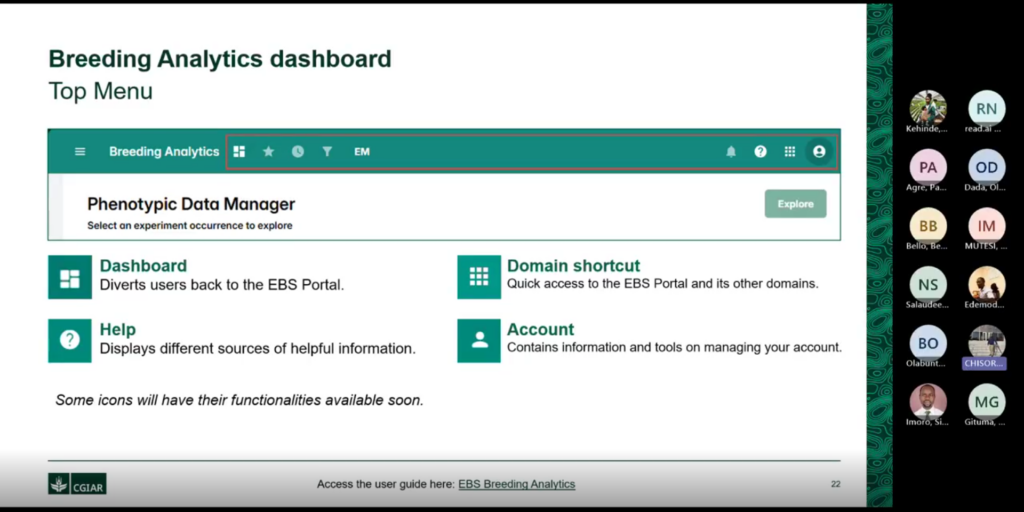
A total of 12 participants from IITA-Yam joined the program, representing various roles including breeders, research supervisors, technicians, assistants, interns, and laboratory personnel. Participants came from Nigeria and engaged in sessions covering Germplasm Management, Inventory and Trait Search, Experiment and Cross Management, Data Collection, Harvest Management, Molecular Data Analysis, Service Management Tools and Core System Tools.
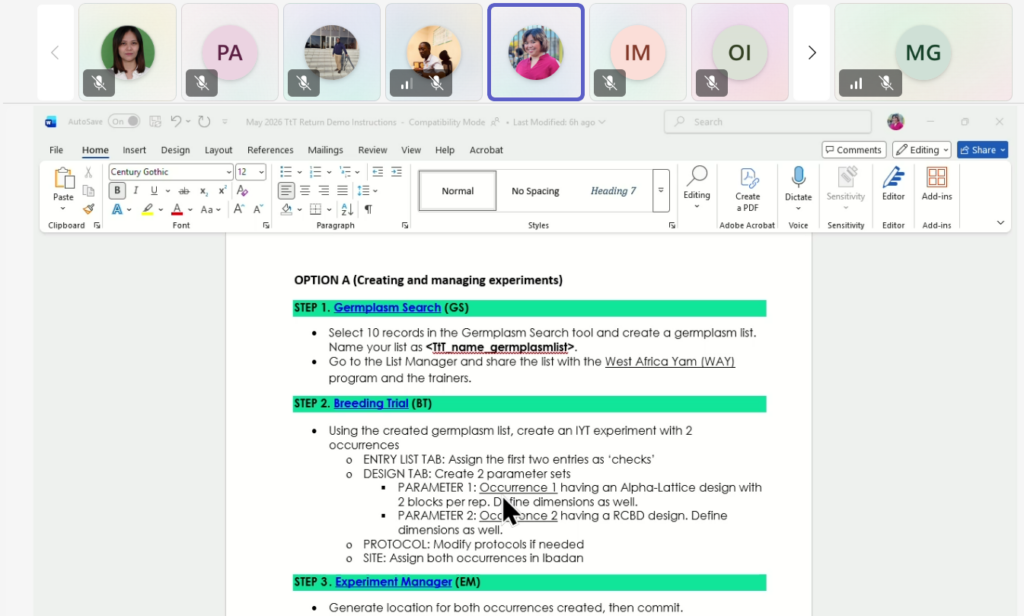
The program adopted a flipped classroom approach, encouraging participants to review learning materials and resources before live sessions. This approach promoted active learning, collaboration, and practical application through demonstrations, discussions, and return demo activities.
By conducting this Train-the-Trainer initiative, EBS continues to strengthen collaboration with partner institutes and support the development of local expertise that will help improve breeding data management and digital transformation efforts across breeding programs.