



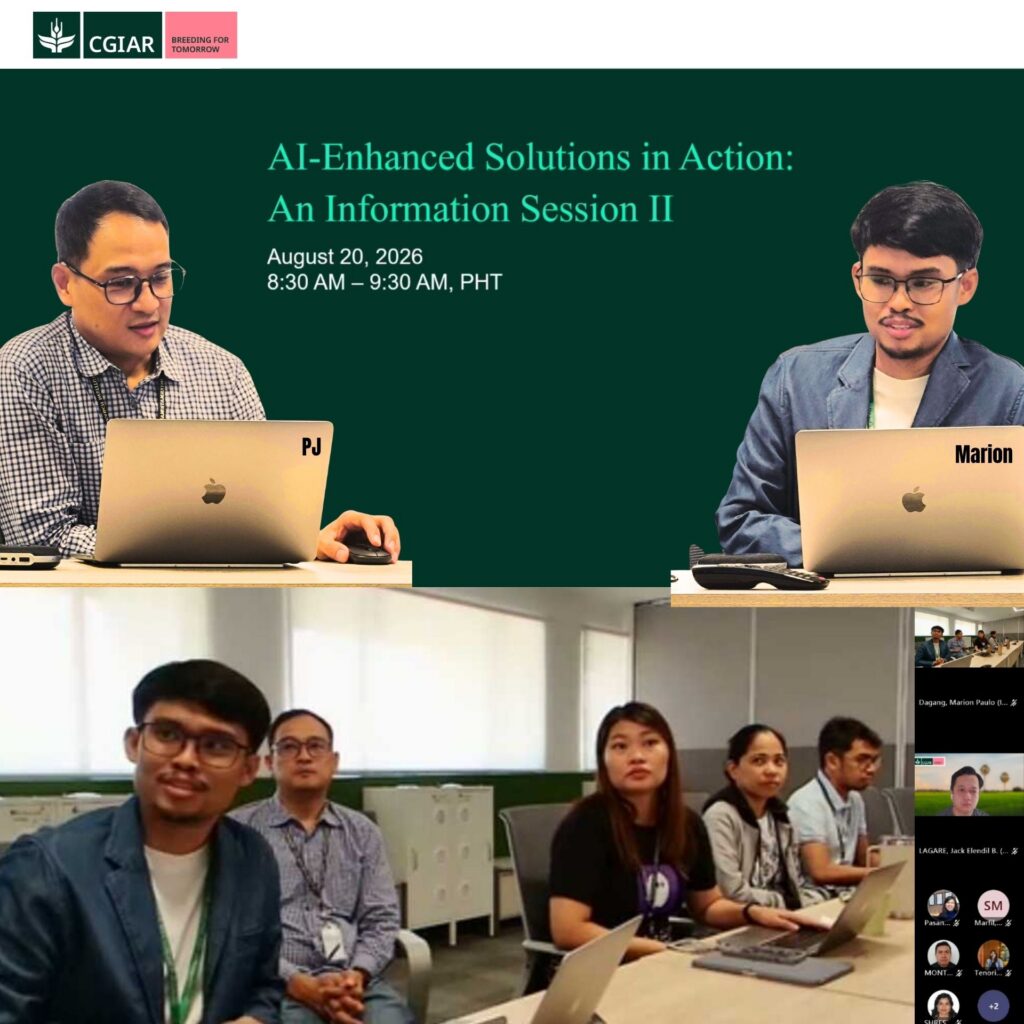
Digital Solutions (DS) continues to explore practical uses of artificial intelligence (AI) to improve software quality and development efficiency. The Solutions Enablement Team talked about two practical uses of agentic AI at the AI-Enhanced Solutions in Action information session: accelerating the automated test creation process and enabling test-driven development (TDD).
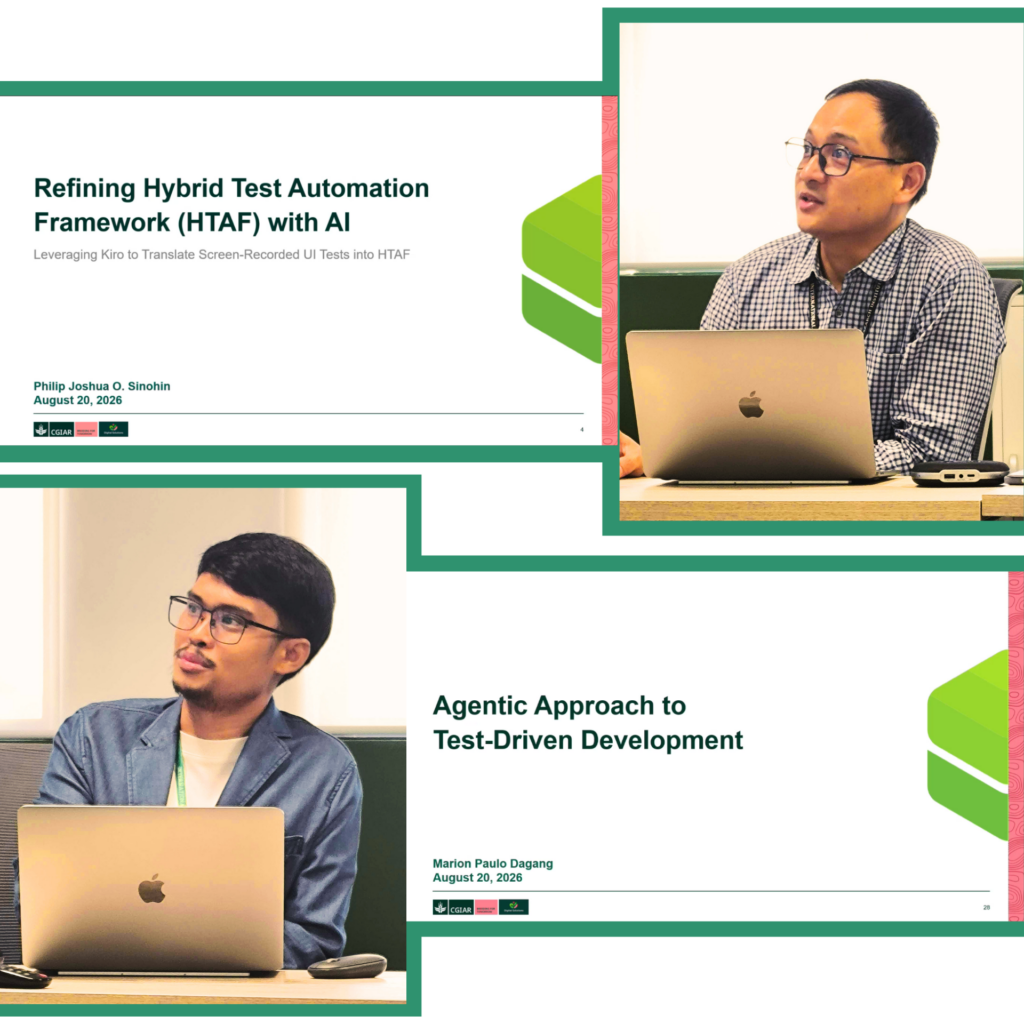
The session was led by Philip Joshua (PJ) Sinohin, Quality Engineer Specialist, and Marion Dagang, Solutions Delivery Specialist, who showcased proof-of-concept work using Kiro, an agentic AI-powered integrated development environment.
Accelerating Automated Testing
PJ presented a proof of concept that uses Katalon Recorder and Kiro to convert recorded user interface (UI) interactions into automated tests aligned with the EBS project’s Hybrid Test Automation Framework (HTAF).
Instead of manually developing each tests and its supporting components, Kiro was guided to study existing test classes, recordings, and framework patterns. It then converted the recorded, monolithic test output into structured page objects and test classes following HTAF standards.
The team initially experimented with conversational or “vibe coding” before moving toward a spec-driven approach. Structured the requirements, acceptance criteria, reference documentation, and coding standards provided clearer guidance for AI-generated outputs.
The results showed promising gains. The results looked promising. During the proof-of-concept period, test creation time was reduced from approximately one day to half a day per test, and smoke-test coverage for selected EBS tools increased from two to 11 test cases.
Supporting Test-Driven Development with AI
Marion demonstrated how agentic AI can also help strengthen test-driven development, where tests are written before the code for the corresponding feature.
The team leveraged Kiro to bring together steering files, agent hooks, and spec-driven development to drive and enforce the test-first approach. Steering files are a permanent record of development standards and practices for AI, while agent hooks act as guardrails that can trigger test creation even before feature code is written.
This approach can reduce the manual effort involved in maintaining TDD practices while allowing developers to focus more on implementing business requirements.
However, the session emphasized that AI-generated code and tests should be treated as draft outputs, not final solutions. Developers and engineers remain responsible for reviewing the results and ensuring that they meet the technical, quality, and domain standards.
Key Takeaways for DS Staff
The session pointed out that successful adoption of AI is not simply a matter of choosing an AI tool. To get useful and consistent results, it requires a good context, clear objectives, reliable documentation, and defined development standards.
For teams just starting their journey with AI, the discussion was that they should start with hands-on, lower-friction experimentation and work their way toward structured, spec-driven practices as they become more familiar. AI may also support teams in spotting gaps in documentation and processes that need to be filled.
The session showcased the potential for AI as a force multiplier for Digital Solutions, reducing repetitive work, expanding test coverage, and enabling more consistent development practices, while keeping human expertise and accountability at the center of software quality.