



Building on Digital Solutions’ AI adoption journey and the hands-on Kiro enablement series, CGIAR teams are now applying artificial intelligence (AI) to strengthen business analysis, software engineering, and project delivery while keeping human expertise at the center of every decision.
As digital initiatives continue to grow in scale and complexity, project teams face increasing pressure to deliver high-quality solutions within demanding timelines. Business analysts, developers, and project managers must process large volumes of information while maintaining accuracy, consistency, and clarity. The AI Enhanced Solutions in Action webinar showcased how Digital Solutions is responding to this challenge by moving beyond AI awareness and capability building to practical application in everyday project delivery.
AI Enhanced Solutions in Action Webinar
The webinar demonstrated how AI can help teams reduce repetitive work, improve consistency, and accelerate project delivery without replacing professional expertise. Through practical demonstrations, presenters illustrated how AI supports both business analysis and software engineering while reinforcing that human judgment remains essential throughout the development lifecycle.
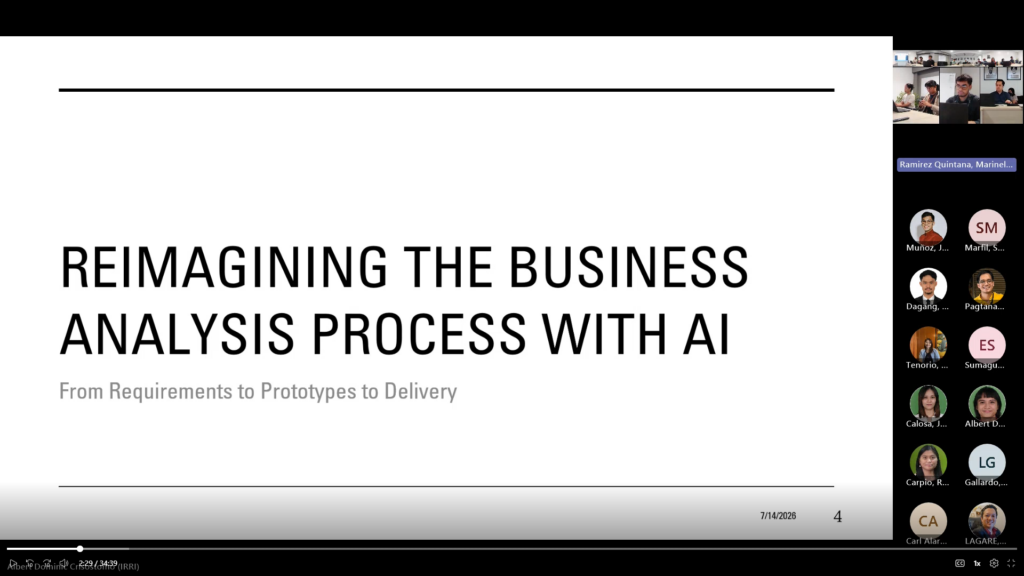
The session highlighted two complementary use cases. Marinell Ramirez Quintana (IRRI) demonstrated how AI can streamline business analysis through Kiro’s specification-driven workflow, while Aldy Crisostomo showcased how AI accelerates technical assessment to support software modernization efforts. Together, these examples illustrated how AI can enhance productivity while allowing professionals to focus on higher-value analysis, collaboration, and decision-making.
Building on Earlier AI Initiatives
The webinar represents the latest milestone in the Digital Solutions team’s broader AI adoption journey.
This journey began with Building an AI-Ready Organization: Lessons from Our Team’s Adoption Journey, which explored how AI can responsibly support daily work and establish a culture of responsible AI adoption. It continued with CGIAR Teams Explore Structured AI Development During Kiro IDE and CLI Hands-on Workshop, where participants gained practical experience using Kiro’s specification-driven development approach.
During the Kiro Enablement Workshop, participants explored how AI can assist software development through structured requirements, guided implementation, and iterative refinement. Facilitated by the Digital Solutions Enablement Team, the workshop encouraged participants to experiment with real use cases, ask questions, discuss implementation strategies, and consider how AI-assisted development could be integrated into their own projects. The session concluded with discussions on future collaboration opportunities and feedback for upcoming learning activities, reflecting participants’ enthusiasm to continue applying these new capabilities.
Together, these initiatives illustrate a natural progression—from building awareness, to developing practical skills, to applying AI in real-world projects that improve delivery and collaboration.
Applying AI to Business Analysis
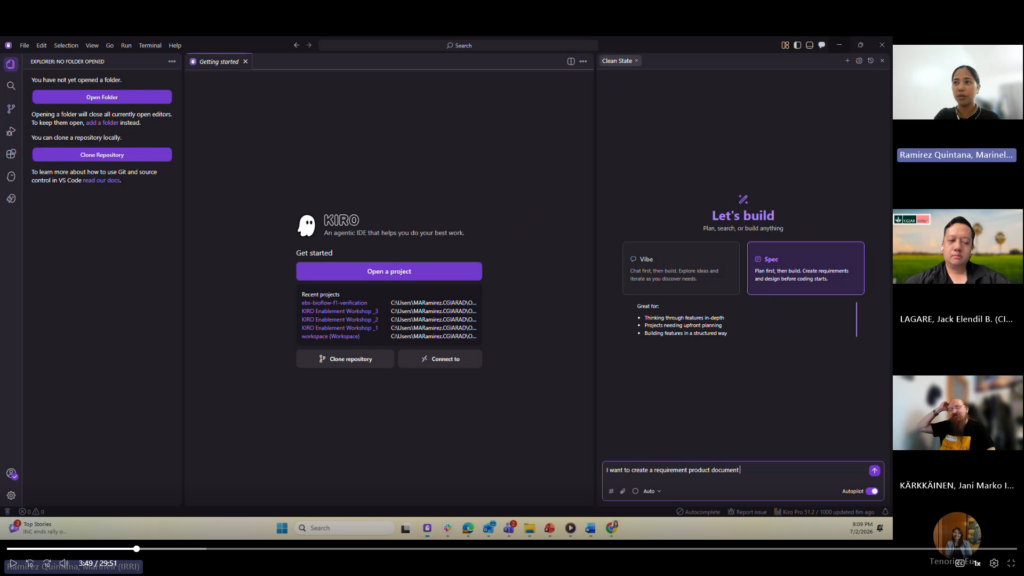
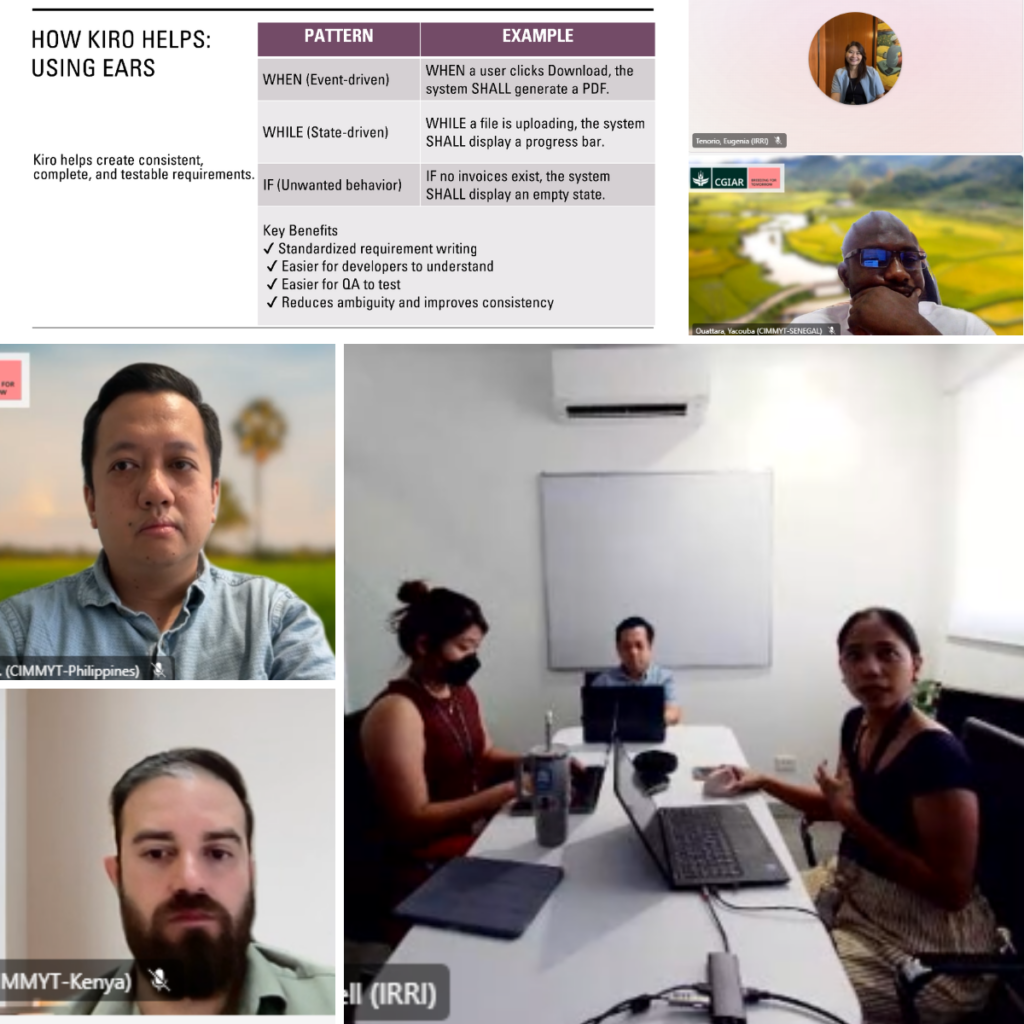
Marinell Ramirez Quintana (IRRI) demonstrated how Kiro supports a specification-driven approach to business analysis by transforming Confluence documentation, meeting notes, screenshots, and design references into structured requirements, user stories, acceptance criteria, task lists, and interactive HTML prototypes.
Rather than simply generating documentation, Kiro guides analysts through the process by asking clarifying questions that help validate requirements before development begins. This iterative workflow enables teams to refine requirements earlier while maintaining alignment with stakeholder expectations.
One of the session’s most notable demonstrations showed how prototype development—traditionally requiring weeks or even months—can now be completed in hours. The faster turnaround enables earlier stakeholder feedback, shorter iteration cycles, and more efficient project planning. Throughout the process, however, business analysts remain responsible for validating requirements, reviewing edge cases, and ensuring that AI-generated outputs accurately reflect business needs.
Applying AI to Software Engineering
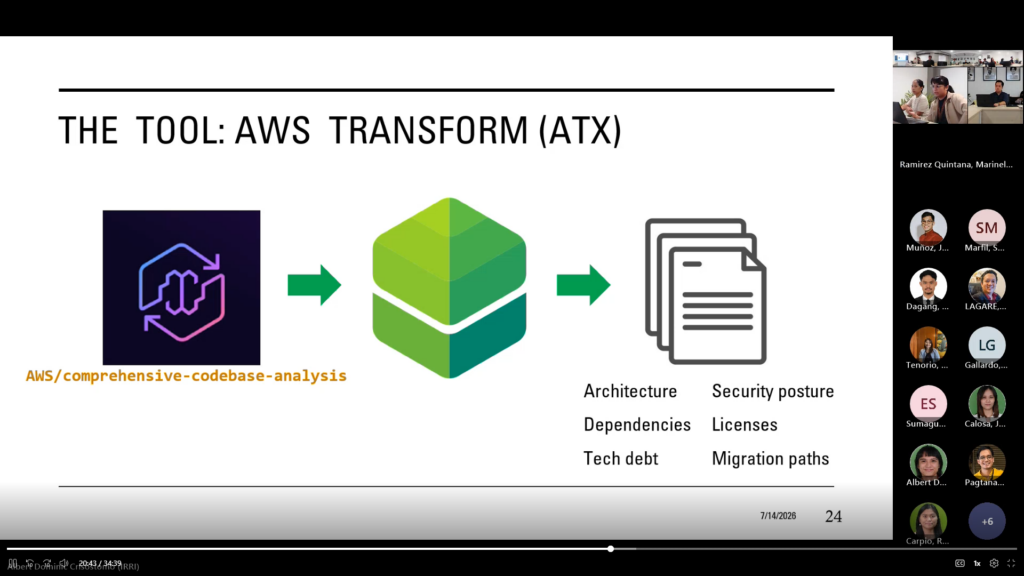
Complementing the business analysis demonstration, Albert Crisostomo presented how AI can accelerate technical assessment across software portfolios.
Using AI-assisted analysis, the team evaluated 18 software repositories, identifying 34 high-severity security findings, more than 42 lower-severity issues, outdated runtime environments, and dependency concerns. The assessment produced a prioritized roadmap of 15 actionable recommendations within two days, providing leadership with consistent, evidence-based guidance for modernization efforts.
Beyond speed, the demonstration highlighted the value of consistency. Every repository was evaluated using the same methodology, producing standardized outputs that supported both technical decision-making and executive reporting. While AI significantly accelerated the assessment process, engineers remained responsible for reviewing findings, prioritizing remediation activities, and overseeing implementation.
Context, Expertise, and Responsible AI
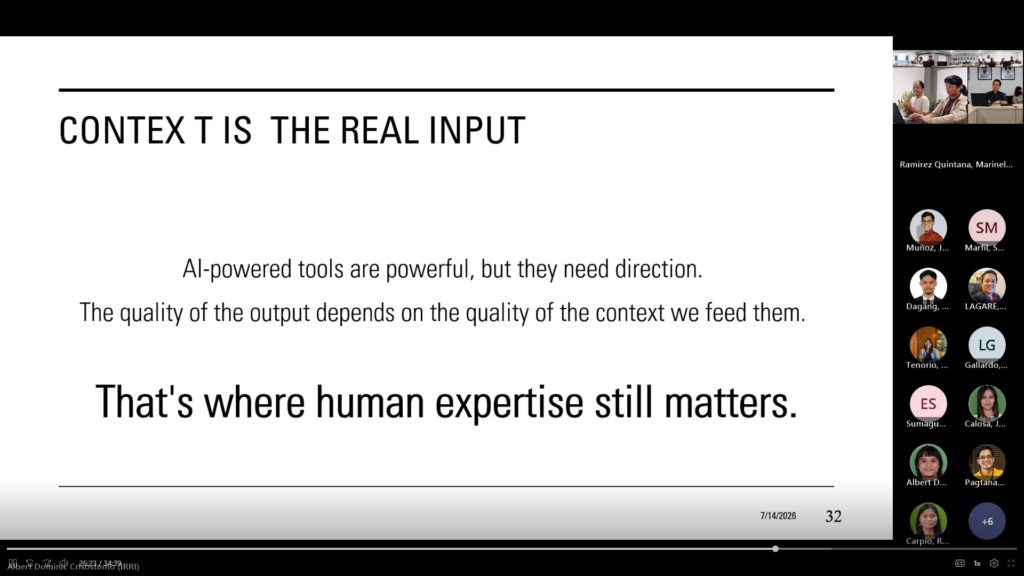
The discussions following the demonstrations reinforced one of the webinar’s central messages: successful AI adoption depends less on the technology itself and more on the quality of the context provided.
AI performs best when supplied with complete documentation, clearly defined objectives, and relevant domain knowledge. Existing organizational assets—including Confluence pages, meeting notes, screenshots, design files, and risk registers—provide the contextual foundation that enables AI to generate accurate, meaningful, and actionable outputs.
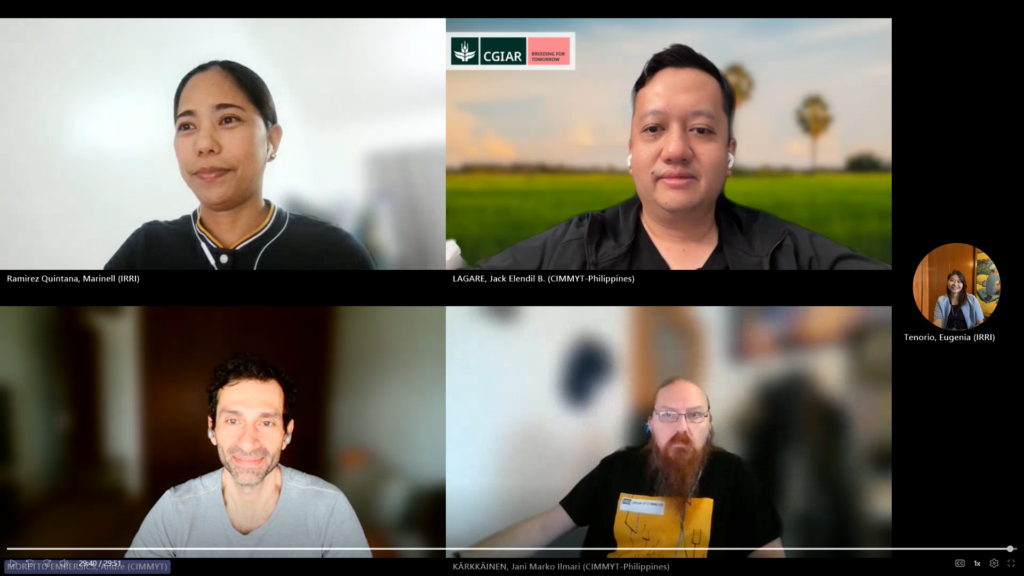
As Jack Elendil Lagare (CIMMYT) emphasized during the discussion, AI should be viewed as a multiplier of professional expertise rather than a substitute for it. Human judgment remains essential for interpreting outputs, validating recommendations, and ensuring AI-generated results support organizational objectives.
Andre Moretto Embersics (CIMMYT) further observed that AI’s ability to understand both structured documentation and contextual explanations creates opportunities beyond software development, including project risk management and future business analysis activities.
Throughout the webinar, presenters consistently reinforced the Digital Solutions team’s principles for responsible AI adoption. Business analysts continue to validate requirements. Engineers verify technical findings. Project teams and stakeholders review recommendations before implementation. This layered review process helps manage risks associated with incomplete context, inaccurate outputs, or unintended recommendations while maintaining accountability, transparency, and quality throughout outcome delivery.
Looking Ahead
The conversations concluded with opportunities to expand AI into additional areas, including business intelligence, software delivery pipelines, security automation, and project management workflows. Participants also expressed interest in continuing to share experiences, expand practical use cases, and strengthen collaboration across CGIAR Centers through future enablement activities.
Rather than viewing AI adoption as a destination, Digital Solutions continues to treat it as an ongoing learning journey. From building organizational awareness, to developing practical capability, to applying AI in real-world projects, each initiative strengthens the team’s ability to deliver higher-quality outcomes while maintaining professional expertise and accountability.
Together, these initiatives demonstrate that successful AI adoption is not defined by the sophistication of the technology alone, but by an organization’s ability to combine quality documentation, professional expertise, and continuous learning into better project outcomes. The goal is not simply to use AI more frequently, but to use it more thoughtfully in ways that strengthen the quality, consistency, and impact of Digital Solutions’ work.