


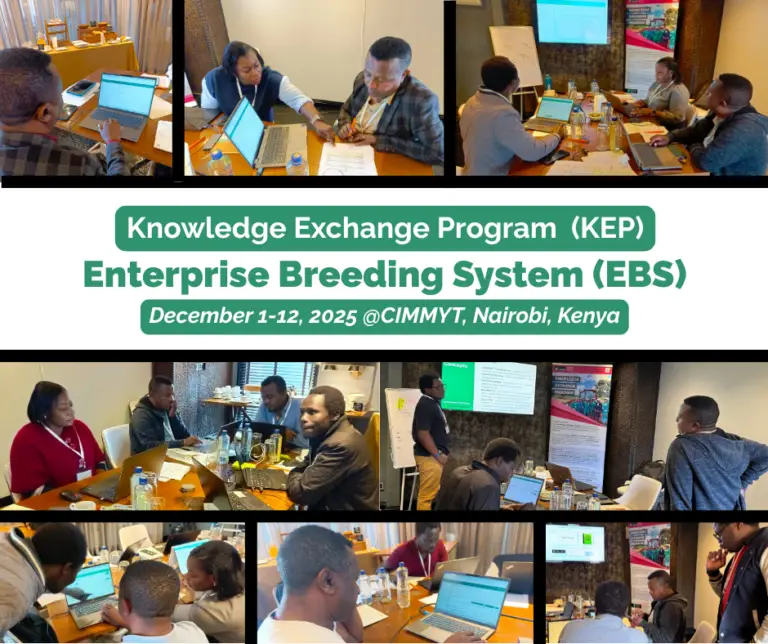
The Enterprise Breeding System (EBS) Knowledge Exchange Program (KEP) was successfully conducted from 1–12 December 2025 in Nairobi, Kenya, bringing together key partners to strengthen digital breeding capacity for wheat research in Eastern Africa. The program was organized by Breeding Innovation & Services (BIS) Digital Solutions in collaboration with Breeding for Tomorrow – CGIAR, and hosted at CIMMYT Nairobi, with structured, hands-on sessions delivered at the Tribe Hotel conference facilities.
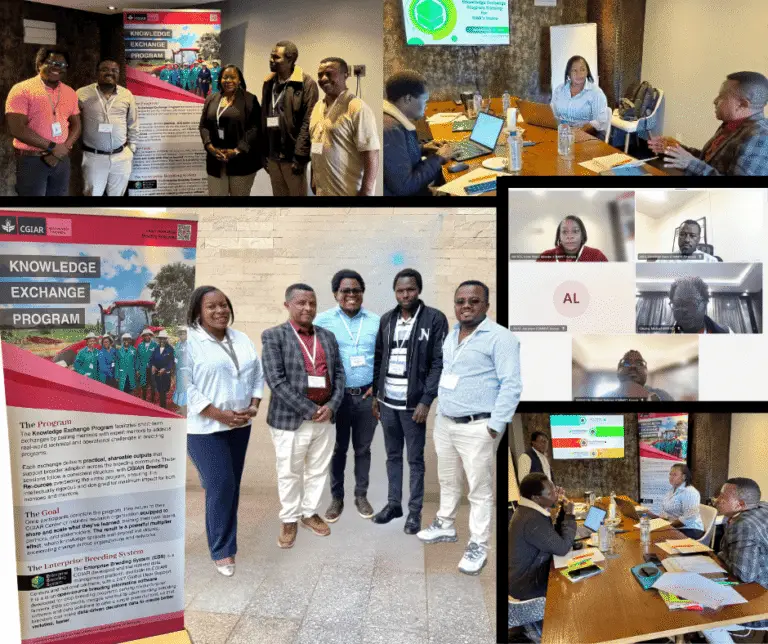
This two-week Knowledge Exchange Program (KEP) supported participants from the Ethiopian Institute of Agricultural Research (EIAR), including the nominated participants Mr. Habtemariam Zegeye and Mr. Geremew Abdi, from the Ethiopian wheat research program. The training aimed to enable effective and confident use of EBS for breeding data management and collaboration within national and regional breeding programs.
The training was facilitated by BIS Digital Solutions(DS), with Michael Gituma, Irene Mutesi, and Jahzeel Calosa providing facilitation and technical support through virtual participation. Additional on-site support was provided by CIMMYT trainers Abraham Lagat and Zerihun Tadesse, who contributed technical guidance and coordination throughout the program.
Practical Learning for Real Breeding Needs
The Knowledge Exchange Program (KEP) focused on enabling participants to confidently apply EBS in their daily breeding activities. Instead of emphasizing technical complexity, the sessions clearly demonstrated how EBS supports core breeding tasks such as trial and nursery planning, field data collection, data validation, reporting, and secure data sharing through practical, real-world examples.
Designed for accessibility, the training ensured that participants with varying levels of prior exposure to digital systems could meaningfully engage with EBS and understand its value in improving efficiency, accuracy, and collaboration.
Strengthening Collaboration Across Programs
Aligned with the Breeding for Tomorrow (B4T) Breeding Resources (BR) initiative, the program reinforced the importance of standardized, digital workflows in modern plant breeding. Dedicated knowledge-sharing discussions highlighted how EBS and related tools enable seamless collaboration between national agricultural research systems and global breeding partners.
A key outcome of the program was improved alignment on data standards, trait definitions, and shared workflows—laying the foundation for more coordinated and data-driven wheat breeding efforts across the region.
Outcomes and Looking Ahead
By the end of the Knowledge Exchange Program (KEP), participants demonstrated increased readiness to adopt EBS within their breeding programs and expressed strong commitment to continued engagement and learning. Feedback gathered during the sessions will directly inform future system enhancements, user guidance, and support services.
Through initiatives like the EBS Knowledge Exchange Program, CGIAR BIS and its partners continue to strengthen capacity, foster collaboration, and advance innovation—ensuring breeding teams are well equipped to deliver improved wheat varieties for the future.